

Rollator vs Standard Walker: Which Is Better for Elderly?
When it comes to choosing a mobility aid, the decision often boils down to two popular options: the rollator and the standard walker. While they both serve the primary purpose of providing stability and support, their designs and functionalities are tailored to different needs. For many seniors and their caregivers, understanding these differences is crucial for ensuring safety, comfort, and independence. In this comprehensive comparison, we’ll break down the pros, cons, and best-use scenarios for both rollators and standard walkers.
The Standard Walker: Stability at Its Core
A standard walker, also known as a folding walker, is characterized by its four legs and stable frame. It typically does not have wheels, although some models may come with two wheels at the front. To move with a standard walker, the user must lift the entire device and place it a short distance ahead before stepping into it. This step-by-step process offers the highest level of stability, making it an ideal choice for those with significant balance issues or those recovering from surgery.
When to Choose a Standard Walker
The primary advantage of a standard walker is its rock-solid support. Because it’s not on wheels (or only has two), it’s much less likely to “roll away” from the user. This makes it a safer option for seniors who need to lean heavily on their mobility aid for balance. It’s also often lighter and more compact than a rollator, making it easier to transport in some cases.
The Rollator: Mobility and Convenience
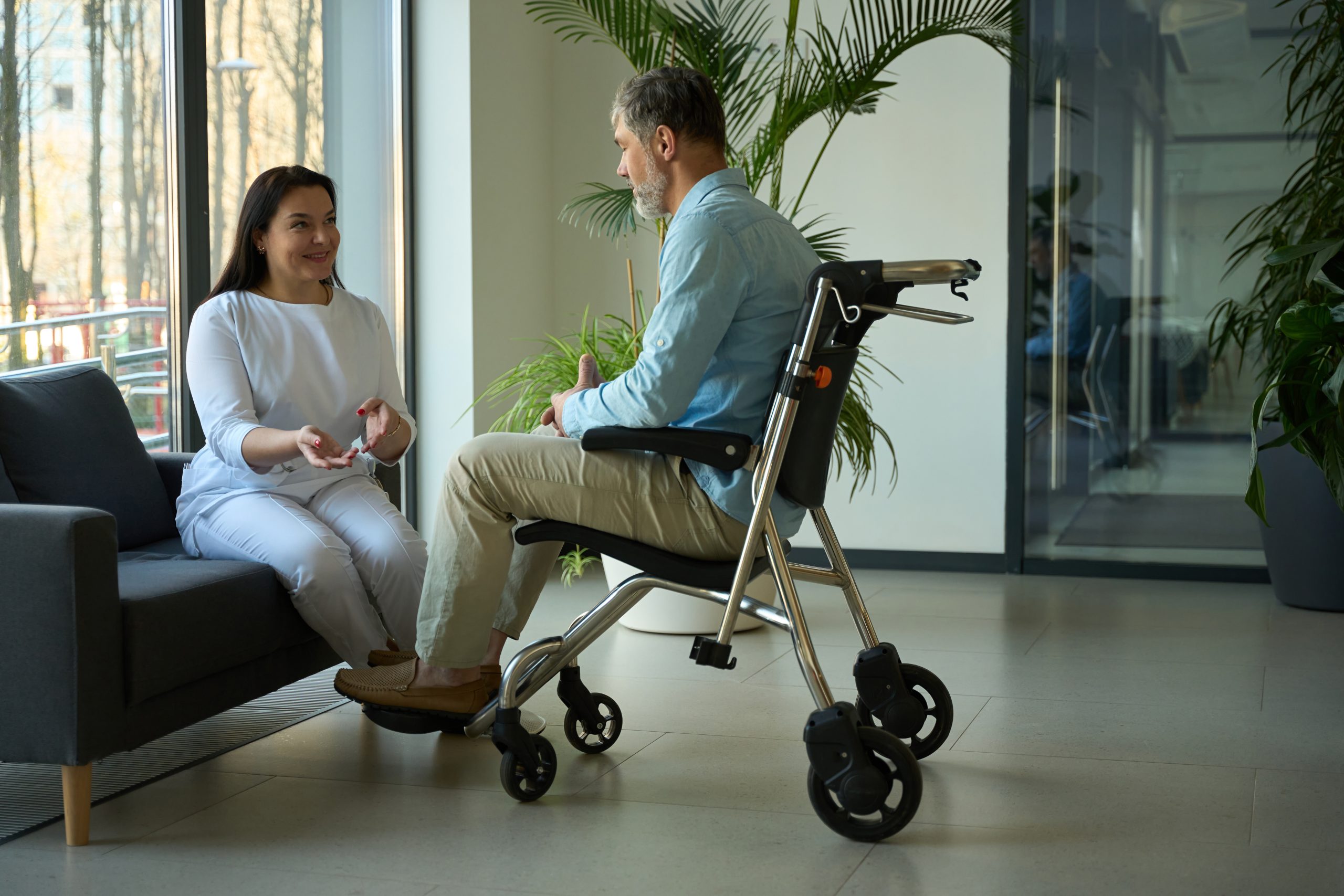
A rollator, on the other hand, is essentially a walker on wheels. It typically has four wheels (though three-wheeled models exist) and is designed for continuous movement. Instead of lifting the device, the user pushes it forward. Rollators also come with built-in hand brakes, a seat, and often a storage basket, providing a level of convenience that a standard walker lacks.
When to Choose a Rollator
Rollators are perfect for active seniors who have some level of balance but tire easily. The ability to push the device smoothly allows for a more natural walking gait. The inclusion of a seat is a major benefit, as it provides a built-in place to rest during long walks or while waiting in line. However, because it’s on wheels, a rollator requires the user to have enough cognitive and physical ability to manage the brakes effectively.
Detailed Comparison: Standard Walker vs Rollator
| Feature | Standard Walker | Rollator | |
|---|---|---|---|
| Stability | High (Great for leaning on) | Moderate (Requires brake control) | |
| Mobility | Low (Lifting required) | High (Continuous pushing) | |
| Weight Capacity | Very High (Up to 500+ lbs) | High (Up to 300-400 lbs) | |
| Build-in Seat | No | Yes | Yes |
| Weight | Light (Approx. 6-10 lbs) | Medium (Approx. 15-25 lbs) |
Key Considerations for Decision Making
Assessment of Balance and Strength
If a senior has severe balance issues or significant muscle weakness, a standard walker is usually the safer bet. The lifting action, while tiring, ensures that the device provides a stable base with every step. Conversely, for a senior with mild to moderate balance issues who is looking to maintain an active lifestyle, a rollator’s ease of movement is a huge asset.
Environmental Factors
Consider where the mobility aid will be used most. Standard walkers are excellent for indoor use and navigating tight spaces. Rollators excel in outdoor environments, on sidewalks, and in large public areas like shopping malls or parks. The larger wheels of a rollator are better suited for uneven terrain.
Cognitive and Physical Coordination
Managing the brakes on a rollator requires a certain level of hand strength and cognitive awareness. If a senior has difficulty coordinating their movements or has advanced dementia, a standard walker’s simpler design might be more appropriate to prevent accidents caused by a rollator moving too quickly.
Pros and Cons at a Glance
Standard Walker
- Pros: Maximum stability, very light, often less expensive, great for recovery.
- Cons: Can be tiring to lift, slower to move, lacks a seat and storage.
Rollator
- Pros: Smooth movement, includes a seat and storage, better for long distances, modern designs.
- Cons: Heavier, can roll away if brakes aren’t used correctly, more expensive, wider profile.
Buying Guide: Tips for a Successful Purchase
- Get a Professional Assessment: Consult with a physical or occupational therapist. They can evaluate the senior’s gait and recommend the best type of aid.
- Try Before You Buy: Whenever possible, have the senior test different models in a store to see which feels most comfortable and secure.
- Consider Adjustability: Ensure the device can be easily adjusted to the correct height for the user.
Safety Tips for Users and Caregivers
- Standard Walker: Ensure the rubber tips are in good condition to prevent slipping.
- Rollator: Always engage the parking brakes before sitting on the seat.
- Both: Regularly check for loose or worn parts and keep the device clean.
FAQs About Rollators and Standard Walkers
1. Can a rollator be used as a wheelchair?
No. Standard rollators are not designed to be pushed while a person is sitting on them. Doing so can cause the device to tip and result in serious injury. There are “hybrid” models available that serve both purposes.
2. Are all walkers foldable for transport?
Most standard walkers and rollators are designed to fold for easy transport in a car. However, rollators tend to be bulkier even when folded.
3. Which one is better for someone with arthritis?
It depends on the severity. Rollators are often better because they don’t require lifting, but the brakes must be easy to use. Some models have ergonomic “palm-push” brakes designed for arthritic hands.
4. Is a 3-wheeled rollator better than a 4-wheeled one?
A 3-wheeled rollator is more maneuverable in tight spaces but is less stable than a 4-wheeled model. It’s generally not recommended for those with significant balance issues.
5. Can I add wheels to a standard walker?
Yes, many standard walkers allow for the addition of two front wheels and “glides” on the back legs, turning it into a semi-mobile device that’s often a middle ground between the two types.
Conclusion: Prioritize Safety and Independence
Ultimately, the “better” mobility aid is the one that best matches the individual’s needs and environment. For those who require maximum stability and are in a recovery phase, the standard walker remains the gold standard. For active seniors who want to maintain their independence and have a place to rest on the go, the rollator is an excellent companion. By carefully considering the factors outlined in this guide, you can make an informed decision that enhances the safety and quality of life for the elderly user.
Internal Link Suggestion: Read our detailed guide on Best Walkers for Seniors in 2026 for top model recommendations.